
Fantasy Football Draft Guide 2025: AFC West Coaches & Their NFL Systems

Without being too braggadocious, one of the main reasons Fantasy Alarm’s Fantasy Football Draft Guide has helped so many people win their fantasy football leagues over the years is because we teach you to be a better player. It’s not just about handing you a list of fantasy football rankings, tossing out a few sleepers and propping up our thoughts-in-action with a fantasy football mock draft. It’s about giving you a better understanding as to why the players are ranked where they are and providing you with the necessary tools to win. It starts with learning the various NFL coaching systems and how that knowledge translates to the fantasy game.
If you’ve listened to me on SiriusXM Fantasy Sports Radio, you’ve probably heard me discuss how various players fit into their team’s offensive system. There are schemes that can make a player shine bright like Courtland Sutton has over the last two seasons as the X-receiver in a Joe Lombardi system and there are players who find themselves in a new offense that doesn’t suit them at all. For three-straight seasons, Diontae Johnson saw at least 144 targets in Pittsburgh but he couldn’t seem to get anything going last year in Carolina. Sure, maybe some of that was his attitude, but his style of play wasn’t a good fit in Dave Canales’ offense. The proverbial “square peg in a round hole,” you’ve heard me mention before.
But before you stress yourself out and worry that this is all too much, understand that we live in a copycat era for the league. Different NFL coaches may have their own variations on different offensive schemes, but the base of the schemes remains the same and if you know that information, the rest is super easy to follow. You just need someone to hand you the base knowledge, and that is why you purchased this draft guide.
If this is your first coaching systems piece, do yourself a favor and open up the full glossary of terms and personnel package breakdowns found in the AFC East Coaching Systems article. That way, if you run into something you aren’t quite familiar with, you can look it up quickly and get back to work!
2025 Fantasy Football: AFC West NFL Coaching Systems
Denver Broncos
| Head Coach | Sean Payton | 3rd year |
| Offensive Coordinator | Joe Lombardi | 3rd year |
| Defensive Coordinator | Vance Joseph | 3rd year |
| Offensive System | Air Coryell | |
| Blocking Scheme | Outside Zone/Power Gap Hybrid |
| Sean Payton -- HC | Joe Lombardi -- OC | |||||||
| Category | 2022 | 2023 | 2024 | Category | 2022 (LAC OC) | 2023 | 2024 | |
| Points | N/A | 19 | 10 | Points | 13 | 19 | 10 | |
| Pace | N/A | 29 | 13 | Pace | 5 | 29 | 13 | |
| Pass Attempts | N/A | 28 | 11 | Pass Attempts | 2 | 28 | 11 | |
| Passing Yards | N/A | 24 | 20 | Passing Yards | 3 | 24 | 20 | |
| Rushing Attempts | N/A | 18 | 13 | Rushing Attempts | 28 | 18 | 13 | |
| Rushing Yards | N/A | 18 | 16 | Rushing Yards | 30 | 18 | 16 |
Broncos Offensive Breakdown
If you couldn’t tell from the introduction or after hearing me pop off about Sean Payton and Joe Lombardi time and time again, this is one of my favorite offenses to break down. This will be the 16th season Payton and Lombardi have worked together – 13 years in New Orleans, two years here in Denver – and because of that, we have a somewhat easier time identifying which players to draft in fantasy every year. And the way they’ve rebuilt this Broncos team, we’re in for some fun.
Let’s start with the basics – this is an Air Coryell system which means we have a lot of vertical routes pushing the ball up field and that it is all built on timing. In this scheme, the quarterback throws to a spot on the field rather than directly at the target. The goal is to lead the receiver and hope for additional yards after the catch (YAC). If everyone is in lock-step, the passing attack looks pristine. If not, you end up with a boatload of turnovers.
While Payton and Lombardi respect the ground game, this offense likes to throw the ball around. They spend most of their time in 11-perssonel (three-receiver sets) and will use a ton of multi-receiver sets to help stretch the defense thin. The scheme funnels targets to the X-receiver which is why Courtland Sutton has led the team in targets and receptions over the past two years. Sometimes it’s easier to equate it to what’s happened in the past, so think about Michael Thomas and Marques Colston from the New Orleans days and Mike Williams during Lombardi’s one-year stint with the Chargers.
They even do a great job involving the backs in the passing game. Fun fact: The running back rooms in a Joe Lombardi system have ranked in the top-five in running back targets and receptions every year for the last 18 seasons and they led the league in many of those. Keep a watchful eye on both R.J Harvey and J.K. Dobbins this season.
They also have something called the joker role which is a non-wide receiver who can line up wide, runs clean routes and has good hands. For years we watched players like Alvin Kamara and Jimmy Graham thrive in this role and after two years of struggling to find their guy, they just may have in tight end Evan Engram. Between the running backs, Engram and Sutton, it may be tough for a guy like Marvin Mims to get consistent work.
As for the actual ground game, it will be a shared backfield cut from the same cloth as the Alvin Kamara/Mark Ingram days of New Orleans. They use a combination of outside zone and power/gap depending on the situation and defense. Like Kamara, Harvey is expected to serve as the early down and goal line back while Dobbins mixes in like Ingram would and handles some third-down work as well. You won’t see huge volume for either, but they can both be productive in tandem. And yes, both can be productive in fantasy.
- Best Fits for the System: Bo Nix, RJ Harvey, Courtland Sutton
- Worst Fits for the System: Audric Estime
Broncos Defensive Breakdown
- Defensive Front: 3-4 with multi-front looks
- Secondary: Man to Man with press coverage
- Man Coverage: 39.4% (5th)
- Zone Coverage: 60.5% (27th)
Here in Year 3, DC Vance Joseph is looking to build off some of the changes he made last season. The secondary has always been strong. He likes to use man coverage most of the time and with corners like Patrick Surtain and Riley Moss, it has been a proven winning formula. Now they add rookie Jahdae Barron and they are going to be a match-up nightmare for most offensive coordinators. Having that advantage allows Joseph to use his safeties all over the place and there is typically a lot of pre-snap movement to disguise the zone coverage they might be sitting in. Adding former 49ers safety Talanoa Hufanga should prove to be a fantastic addition.
Having a secondary of this quality has allowed Joseph to focus more on stopping the run which had been a serious issue in the past. But then something happened that really helped this defense turn the corner. After getting gouged on the ground during the first two weeks last season, Joseph finally wised-up and scrapped his wide-nine formation where the defensive line is spread out and the edge rushers are on the outside of the tackles. There are just too many holes to give the offense a path to run through, so Joseph tightened them up and suddenly they were doing significantly better. Having a big body like that of D.J. Jones plugging up the middle is always nice, but now that he has legitimate help, the Broncos can move forward.
- Best Fits for the System: D.J. Jones, Patrick Surtain, Nik Bonitto
- Worst Fits for the System: Damari Mathis
Kansas City Chiefs
| Kansas City Chiefs | ||
| Head Coach | Andy Reid | 13th year |
| Offensive Coordinator | Matt Nagy | 3rd year |
| Defensive Coordinator | Steve Spagnuolo | 7th year |
| Offensive System | West Coast Offense | |
| Blocking Scheme | Inside & Stretch Zone |
| Andy Reid -- HC | Matt Nagy -- OC | |||||||
| Category | 2022 | 2023 | 2024 | Category | 2022 (KC) | 2023 | 2024 | |
| Points | 1 | 15 | 15 | Points | QB COACH | 15 | 15 | |
| Pace | 11 | 20 | 16 | Pace | QB COACH | 20 | 16 | |
| Pass Attempts | 5 | 2 | 6 | Pass Attempts | QB COACH | 2 | 6 | |
| Passing Yards | 1 | 6 | 14 | Passing Yards | QB COACH | 6 | 14 | |
| Rushing Attempts | 25 | 25 | 16 | Rushing Attempts | QB COACH | 25 | 16 | |
| Rushing Yards | 20 | 19 | 22 | Rushing Yards | QB COACH | 19 | 22 |
Chiefs Offensive Breakdown
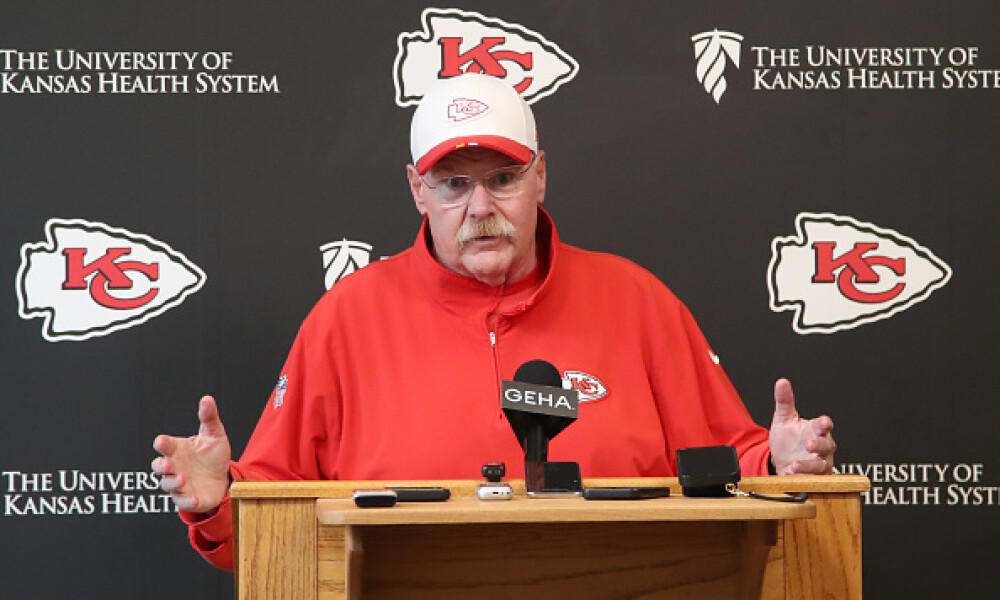
There is a reason Andy Reid has been a gainfully employed NFL head coach since 1999 and has only been with two teams during that 26-year span. Not only does his offensive scheme play beautifully in the NFL, but his ability to adapt on a year-to-year and game-to-game basis to the growing changes we see in this game is downright masterful. Even his in-game adjustments can leave many a football aficionado in awe. He is a three-time Super Bowl champion as a head coach (four when you add in his work with Green Bay as an assistant) and every year is a threat to win it all again.
While OC Matt Nagy handles the play-calling these days, this is still very much Reid’s offense. His base is a west coast scheme that uses the pass to set up the run. He likes the short, high-percentage passes to move the chains up and down the field and set up the deeper shots. Things do change on a consistent basis, though, depending on match-ups and personnel. Four years ago, the Chiefs were stretching the field and Patrick Mahomes was slinging the rock better than anyone. But as defenses began to adjust, so did Reid. People dog Mahomes all the time for his shrinking aDOT, but that was what was working best for the team. Granted, last year’s changes were a direct result of major injuries to the receiving corps, but make no mistake, if everyone was healthy and they were losing games, adjustments would be made in a timely fashion.
This year, with everyone healthy, we expect them to try and stretch the field some more. A lot will depend on a potential suspension for Rashee Rice, but with a healthy Hollywood Brown, Xavier Worthy, JuJu Smith-Schuster and even rookie Jalen Royals, the Chiefs have some outstanding weapons that will make coverage a nightmare for opposing defensive coordinators. If they can find success stretching the field, it should open things up even more underneath for someone like Travis Kelce.
The ground game will be serviceable for reality, but there are question marks for fantasy purposes. Isiah Pacheco leads the backfield when healthy, but he’s just not built in the image of greats like Jamaal Charles and Priest Holmes. He’s a fine north/south runner and has had some success in the outside zone, but Reid employs a pass-catching running back these days. It was Kareem Hunt for a bit and he is back with the team once again, but they also brought in former 49ers RB Elijah Mitchell and drafted receiver-turned-running-back Brashard Smith out of SMU. Depending on how everyone looks in camp, that’s probably the third-down back pecking order, though some sources speculate Smith to be the guy by Week 1.
Overall, this should be a fine pool to fish for fantasy purposes. Mahomes, Rice, Worthy and even Kelce top my boards. Hollywood Brown in best ball maybe and I’m still a little lukewarm on Pacheco. Just understand that things can turn on a dime here because, if Reid sees something, he won’t say something. He’ll just make the necessary adjustments.
- Best Fits for the System: Patrick Mahomes, Travis Kelce, Rashee Rice
- Worst Fits for the System: Xavier Worthy, Carson Steele
Chiefs Defensive Breakdown
- Defensive Front: 4-3 with some multi-front
- Secondary: Zone & Man Mix, 2-High Safeties
- Man Coverage: 34.7% (9th)
- Zone Coverage: 64.6% (26th)
Steve Spagnuolo and his defense have been just as integral to the Chiefs recent success as Patrick Mahomes and the offensive weapons. The offense knows how to score points early which puts more pressure on the opposing team and Spags does a great job adjusting to ensure the lead is maintained. He likes to bring the pressure from all angles and at all times, disguising it all to lure the opposing quarterback into a false sense of security.
On the defensive line, Spags runs a four-man front, but will offer a variety of looks as he continually moves Chris Jones around the find the mismatch. He likes to stack the middle of the defensive line – lining up the ends to the inside of the tackle – which causes some confusion for offensive lineman looking to fill their gap assignments. This creates a situation where either the outside edge rusher has an easier path to the quarterback or, if the tackle commits to him and abandons his gap, then either the defensive end or defensive tackle find their way through.
In the secondary, it should be interesting to see if the Chiefs will be able to run as much man-coverage as they have in the past. Three of their four cornerbacks from last year are gone and while Kristian Fulton and safety Mike Edwards are good additions, it’s not the same unit and we could see a lot more zone. Unless he’s blitzing, Spags will usually employ two high safeties to try and take away the deep shots, but the lack of true cover corners might make things difficult. If that does happen, we could be in for more shootouts than Mahomes is used to. Not that it’s a bad thing for fantasy…
- Best Fits for the System: Chris Jones, Nick Bolton
- Worst Fits for the System: Mike Danna, Jaylen Watson
Las Vegas Raiders
| Las Vegas Raiders | ||
| Head Coach | Pete Carroll | 1st year |
| Offensive Coordinator | Chip Kelly | 1st year |
| Defensive Coordinator | Patrick Graham | 4th year |
| Offensive System | Spread/Option | |
| Blocking Scheme | Power/Gap with Inside Zone Mix |
| Pete Carroll -- HC | Chip Kelly -- OC | |||||||
| Category | 2022 (SEA) | 2023 (SEA) | 2024 | Category | 2022 (UCLA) | 2023 (UCLA) | 2024 (OHIO ST) | |
| Points | 9 | 17 | N/A | Points | HC | HC | OC/QB COACH | |
| Pace | 14 | 27 | N/A | Pace | HC | HC | OC/QB COACH | |
| Pass Attempts | 15 | 17 | N/A | Pass Attempts | HC | HC | OC/QB COACH | |
| Passing Yards | 11 | 14 | N/A | Passing Yards | HC | HC | OC/QB COACH | |
| Rushing Attempts | 22 | 31 | N/A | Rushing Attempts | HC | HC | OC/QB COACH | |
| Rushing Yards | 18 | 28 | N/A | Rushing Yards | HC | HC | OC/QB COACH |
Raiders Offensive Breakdown
It’s a new dawn, it’s a new day, it’s a new life and Raiders fans are finally feeling good. After a few seasons of “who knows who is at the helm” and running the show, the Raiders bring in veteran head coach Pete Carroll who then turned around and hired Chip Kelly as his offensive coordinator, a man who spent the last seven years back at the collegiate level following an unsuccessful stint as the 49ers head coach. Carroll has certain ideas as to how he wants this offense to run and Kelly seems finally ready to execute that vision.
Kelly has seemingly learned a lot during his most recent seven years at the collegiate level, most notably last year as the OC and QB coach at Ohio State where he learned to slow things down and be more methodical in his approach to moving the ball up and down the field. Typically known for his fast-paced, high-octane ways, Kelly slowed things down, tuned to more of a power/gap blocking scheme and gave more depth (layers) to the routes his receivers run. In short, he ran an offense built more like an actual NFL offense and less like a run-and-gun college team.
His offense is still a version of the spread formation which uses all parts of the field, both vertically and horizontally and speed is still a focal point. That stretches out the defense in all directions and it makes the RPO work much more effective. Geno Smith, someone who Carroll trusts implicitly to run his team, may not be someone you expect to see running the football on his own, still runs RPO well thanks to his strong ability to read defenses and get the ball into the right playmaker’s hands.
You will see the Raiders use a lot of 12 and 22-personnel (two-TE sets). That not only keeps Brock Bowers on the field at all times, but it frees him up to run routes while still adding the extra blockers for the run game. Kelly still wants to get the ball downfield, but with Bowers on the underneath routes, it always gives Smith a legitimate option if he is looking to throw but the field-stretchers aren’t available.
As for the run game, well, this is going to be a hot one. You’ve probably heard me say that the only thing Pete Carroll loves more than chomping gum is to run the football and that will be the feature of this offense. Kelly loves to run the football as well, so adding a phenom like Ashton Jeanty is going to be huge. He can do it all and will be a true bell-cow workhorse both on the ground and through the air. The Raiders offensive line worked better in power/gap last season and they’ve made some improvements to help nurture that in this system. Overall, this is a scheme that fantasy owners of both Jeanty and Bowers should love and it even keeps Geno at least in the conversation as a QB2 in superflex.
- Best Fits for the System: Geno Smith, Ashton Jeanty, Brock Bowers
- Worst Fits for the System: Raheem Mostert, Tre Tucker
Raiders Defensive Breakdown
- Defensive Front: 4-2-5 with multiple looks
- Secondary: Cover-4/Quarters
- Man Coverage: 31.2% (15th)
- Zone Coverage: 66.3% (21st)
Carroll opted to retain Patrick Graham as his defensive coordinator, so we aren’t going to see a whole lot of changes on this side of the ball. He uses a four-man front base, but will change it up with a variety of looks up front, mostly by where he lines up Maxx Crosby but also to get a fifth defensive back out there in coverage. With a healthy Christian Wilkins plugging multiple gaps, something they lost last year when he suffered a foot injury, it should be easier to move Crosby around without giving up too much up front to stop the run.
In the secondary, you can expect to see a lot of man-coverage mixed with Cover-4, quarters and some Cover-3 as well. The fifth defensive back allows him to map out zones differently from scheme to scheme without lapsing in coverage or asking too much of one defensive back. Adding Jeremy Chinn at safety should be a strong move for them as he is capable in a variety of zones and has been a turnover specialist. His ability to cover as much ground as he does should also allow the linebackers to be more versatile and add a stronger element to the pass-rush.
- Best Fits for the System: Maxx Crosby, Christian Wilkins, Jeremy Chinn
- Worst Fits for the System: Adam Butler, Darnay Holmes
Los Angeles Chargers
| Los Angeles Chargers | ||
| Head Coach | Jim Harbaugh | 2nd year |
| Offensive Coordinator | Greg Roman | 2nd year |
| Defensive Coordinator | Jesse Minter | 2nd year |
| Offensive System | West Coast Offense | |
| Blocking Scheme | Ouside Zone/Power Gap Hybrid |
| Jim Harbaugh -- HC | Greg Roman -- OC | |||||||
| Category | 2022 (MICH) | 2023 (MICH) | 2024 | Category | 2022 (BAL OC) | 2023 | 2024 | |
| Points | HC | HC | 11 | Points | 19 | N/A | 11 | |
| Pace | HC | HC | 31 | Pace | 25 | N/A | 31 | |
| Pass Attempts | HC | HC | 28 | Pass Attempts | 28 | N/A | 28 | |
| Passing Yards | HC | HC | 19 | Passing Yards | 28 | N/A | 19 | |
| Rushing Attempts | HC | HC | 12 | Rushing Attempts | 7 | N/A | 12 | |
| Rushing Yards | HC | HC | 17 | Rushing Yards | 2 | N/A | 17 |
Chargers Offensive Breakdown
As expected, the arrival of Jim Harbaugh and Greg Roman dawned a new age for the Chargers and they are the ultimate run-first team. The offense is a west coast base which means they will use a lot of short, high-percentage passing to help move the chains, but they will use the run to set up the pass. That is more than evident by the offseason personnel changes in which they signed Najee Harris and drafted Omarion Hampton to replace the aging and oft-injured J.K. Dobbins and Gus Edwards. We’ll have to see just what the extent of Harris’ 4th of July eye injury is really all about to see just how much of a workload Hampton gets to start, but make no mistake – these boys are going to run.
We can look back to how Roman evolved the Ravens offense when he was brought in to develop Lamar Jackson and while Justin Herbert isn’t the runner Jackson is, we did see him set new career-highs in rushing attempts and rushing yards. Nothing outlandish but enough to keep fantasy owners intrigued. The key here is the zone/read option Roman likes to use which has an element of RPO to it. In a zone/read, Herbert will watch to see where the linebackers and safeties are headed and put the ball into the hands of the guy with the softest match-up. This keeps the defense on its heels most of the time and can freeze the linebackers in the same fashion as a traditional RPO.
Roman is also going to employ more 12 and 22-personnel, the two-TE sets he liked to run in Baltimore, and now that he’s added a veteran pass-catcher like Tyler Conklin, he can do just that. Will Dissly is likely to handle much of the in-line work while they also look to develop Oronde Gadsen II, whom they believe can be one of the premier two-way tight ends in the game.
This really is shaping up to be an ideal Harbaugh/Roman which should give defenses fits while also yielding strong value for fantasy. Hampton and Harris should be very usable running backs and we can expect another strong season out of Ladd McConkey who has become the security blanket for Herbert. I will give some caution to McConkey’s fantasy football ADP and urge caution against taking him too high. With the running backs they want in place, it seems unlikely that McConkey will see some massive uptick in targets, especially when they drafted Tre Harris to be that complementary split-end they need to help stretch the field. Quentin Johnston will also be used in that fashion, so with them and the extra tight ends, just how many more targets do you see him getting?
- Best Fits for the System: Omarion Hampton, Tyler Conklin, Ladd McConkey
- Worst Fits for the System: Kimani Vidal, Quentin Johnston
Chargers Defensive Breakdown
- Defensive Front: 3-4 with 4-2-5 Mixed in
- Secondary: Cover-3
- Man Coverage: 22.1% (28th)
- Zone Coverage: 77.7% (4th)
Defensive coordinator Jesse Minter has been with Harbaugh for some time and his ability to keep the defense fluid both in-game and throughout the season has tremendous appeal. While he will use a three-man front as his base, he uses the outside linebackers as his primary pass-rushers and they will have their hand in the dirt quite often. Life without Joey Bosa shouldn’t be too bad, especially with the addition of rookie Kyle Kennard joining forces with veteran Khalil Mack. We should see a solid pass-rush while not losing anything on the run-stopping.
Minter loves getting that fifth defensive back on the field in coverage because he uses a ton of movement, both pre and post-snap, to disguise where the pressure is coming from as well as where his coverage zones for each DB begins and ends. He needs to do this because their man-coverage is not going to be particularly strong as the corners are soft. If you were part of the Fantasy Alarm #FAmily last year, you saw how we spent our entire year targeting against Benjamin St-Juste when he was with Washington. We will definitely be doing that again, especially because he’s now being paired with Donte Jackson on the other side, another guy we loved to target against. Maybe make a note right now to play the Week 1 Friday night DFS Showdown slate and load up on Chiefs receivers.
- Best Fits for the System: Junior Colson, Derwin James, Kyle Kennard
- Worst Fits for the System: Denzel Perryman, Donte Jackson