2026 Pre-Draft Dynasty Rookie Wide Receiver Rankings
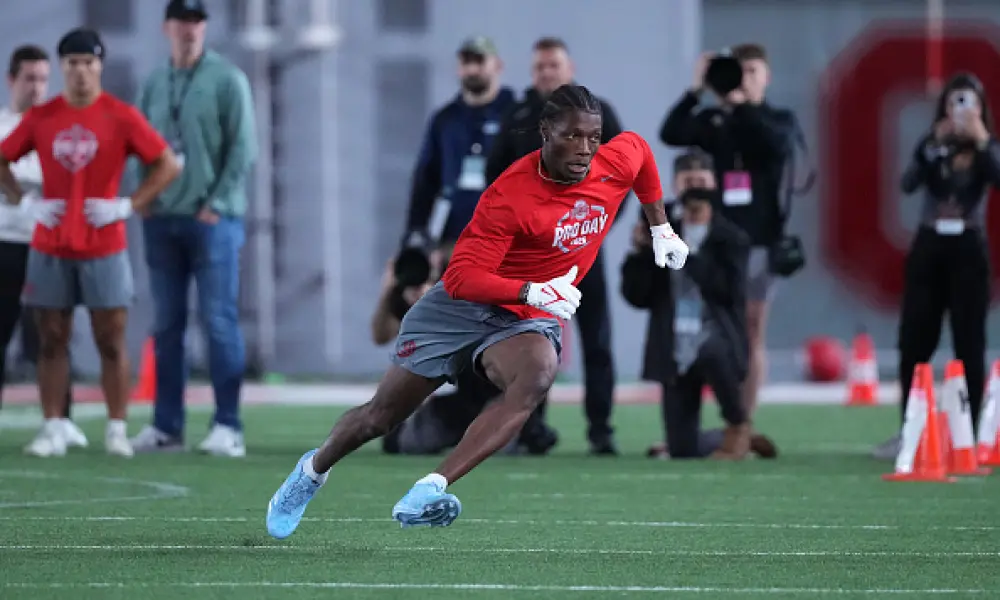

Wide receiver is often the most stable part of your dynasty fantasy football rankings. They have big upside like running backs. But they don’t have the short shelf life that running backs have. Positions like tight end and quarterback also have longer shelf lives, but those positions are far more linear than wide receiver - the risk of being benched or relegated to blocking is far lower. Wide receivers never go out of style in your dynasty rankings, whether you are rebuilding or competing now.
As with every position, draft capital matters for wide receivers. It’s the most predictable measure of future success. But it’s not everything. Our job is to figure out where and when to deviate from the draft and give ourselves the best odds in fantasy football. And that starts by categorizing the players.
Not every wide receiver role is created equally. Playing split end (X) is hard. Guys who only play the slot have capped upside. And field stretchers can be notoriously inconsistent. Our main job at this stage is to start understanding these players and how they might fit NFL offenses. Then, once we know where they’ve gone in the 2026 NFL Draft and their fit within the scheme, we will finalize our dynasty rankings. Here are our thoughts on the top options so far - we will continue to add profiles to the chart below over the next month before the draft kicks off!
| Tier | School | Name | Pos | Type | Age | 40 | Height | Weight |
| 1 | Ohio State | Carnell Tate | WR | All Around | 21 | 4.53 | 6-2 | 192 |
| There has been much discussion about the 40 time for Carnell Tate - including arguments about whether the time was even correct or not. But we don't really care. The film and metrics for this player speak for themselves. With the combine, we are simply hoping that he falls within the acceptable range of outcomes. Not too small, not too slow, etc. Tate checks the boxes in pretty much all the other categories like breakout age and target share and that's while competing with guys like Marvin Harrison and Emeka Egbuka at Ohio State. We are confident he has a rock-solid NFL floor. The real question for his upside is what role he will play at the next level. He played virtually all of his snaps out wide in college, flipping between split end and flanker. But many of the very best fantasy wide receivers dabble in the slot on top of their outside snaps and he took very few snaps out of the slot. Draft capital and landing spot will be important to the final profile in that regard as some teams are fairly committed to specific slot options while others are not. The floor is high, especially with his ability vs man to man, but his projected role will determine ceiling as it's not easy to thrive as a true split end in the modern NFL, especially as a young one. Ask Marvin Harrison and Brian Thomas | ||||||||
| 1 | USC | Makai Lemon | WR | Slot/Flanker | 21 | 4.58 | 5-11 | 192 |
| Makai Lemon's deployment was quite the opposite of Carnell Tate's. While Tate ran around 90% of his routes from the outside, Lemon ran more than 70% of his routes from the slot per PFF. As we mentioned, guys can have big upside at the next level if they can carve out a role where they play slot for 3 WR sets and flanker for 2 WR sets, like CeeDee Lamb or Chris Godwin. But guys with this profile sometimes get stuck in slot-only roles, especially early, like Josh Downs or Jayden Reed. Per Matt Harmon of Reception Perception, Lemon did not fare as well vs. press coverage as guys like Jaxon Smith-Njigba or Emeka Egbuka, who are in his upside comp range, and that is a key to getting outside snaps at the next level. The even scarier outcome is that we've seen a lot of "slot merchants" drafted on Day Two or even Day One who fizzled out completely at the next level like Kadarius Toney or Treylon Burks. With Lemon, we're a little more confident in his ability, especially if he goes in the first round to a team with a slot/flanker role available, like the Patriots or Falcons. Honestly, with his profile, it's not the end of the world if he starts only in the slot as a rookie as that could present a buy-low window like it did for Jaxon Smith-Njigba and CeeDee Lamb. | ||||||||
| 1 | Arizona State | Jordyn Tyson | WR | Slot/Flanker | 21 | N/A | 6-2 | 203 |
| Jordyn Tyson checks a ton of boxes for us and, if not for injuries, he likely could have checked them all. Lingering injuries have prevented him from working out this offseason so we really don't have workout metrics to go off. Also, a sophomore injury was likely responsible for him returning to college and missing out on that coveted "early declare" status. Either way, he's a fairly young prospect that both popped as a freshman and crushed in Year 3 with 75 catches for 1,101 yards and 10 TDs so it's hard to complain. He can line up all over the field, including the slot, but did struggle a little vs. press coverage which could prevent him from playing a lot of split end with his foot tethered to the line. To us, there is a pretty clear top three and, if the NFL sees it that way as well and Tyson gets round one draft capital, we'll be in on him. In fact, we would not at all be surprised if Jordyn Tyson was the first wide receiver off the board given his upside compared to the other top options. | ||||||||
| 2 | Texas A&M | Kevin "KC" Concepcion | WR | Slot/Flanker | 21 | N/A | 6-0 | 196 |
| Special teams production can be a double-edged sword in the scouting game. There is some positive correlation that predicts future NFL success. But we've also seen these players overdrafted at times because GMs feel the floor of a "special teams guy" at least helps the team. But with players like Andy Isabella or Jalen Reagor, that didn't help us much in fantasy even if they did return kicks and punts. The same goes for the gadget work with screens and 70 carries for 431 yards - we'd rather see it than not but it doesn't always translate to the next level. That will always concern us with guys like this. And, if KC had remained at NC State, where he was playing virtually all of his snaps in the slot per PFF, we probably would have been out on him. But the season he had at Texas A&M where he showed an ability to play outside and run real high aDot routes (12.3) before declaring early has us willing to give him a look.This player is causing a big debate in the "film vs. production" world but I think it's hard to argue against the film guys when you watch what he can do, especially against man-to-man. This type of route running does not scream "return man and gadget guy" at the next level like some players of the past. | ||||||||
| 2 | Indiana | Omar Cooper | WR | Slot/Flanker | 22 | 4.42 | 6-0 | 199 |
| Cooper didn't truly breakout until his fourth year in school. But a super-efficient 2024 likely led to more work in 2025. He also underwent a pretty big usage change after running 90% of his routes out wide in 2024 then flipping completely to run only 15.7% out wide and 83.3% from the slot in 2025, per PFF. We see a lot of guys like this that make their bones on YAC, screens, and gadgety plays but what we don't see are a lot of them that are 6'0", 200 pounds with a 4.42 forty yard dash. That and his production put him more in the Calvin Ridley or Rashee Rice category than some of the players who don't end up cutting it. | ||||||||
| 2 | Washington | Denzel Boston | WR | Split End | 22 | NA | 6-4 | 212 |
| Boston has your "prototypical split end" build. And he plays that way as well - he's the big, strong contested catch guy playing 80% of his snaps out wide. Rome Odunze staying for another year was a bit of a set back for him as they have overlapping skillsets. In fact, he was stuck in a room with Rome Odunze, Ja'Lynn Polk, and Jalen McMillan who were all Day 1 or 2 draft picks. We would have liked to see more production from him after they left but he was clearly a red zone threat with 20 TDs over his last two years. There are a lot of teams that could use a guy like this but sometimes players with this profile, even if they earn a role, end up more of a "sacrificial X" playing the hardest role in the offense while other WRs get a free release from the slot or as a Z receiver. Like a number of guys in this class outside of the top couple, high draft capital and the right landing spot is going to factor in. | ||||||||
| 3 | Indiana | Elijah Sarratt | WR | Split End | 23 | NA | 6-3 | 210 |
| Elijah Sarratt is a true boundary wide receiver with the size to play split. But we often run into a "chicken or the egg" situation with guys that have his profile. He's not particularly fast or quick in short areas. So we look at the big contested catch total and have to wonder - was that just because he's good in those situations and they trust him with jump balls or was it because he struggled to gain separation? I've seen some compare the situation with teammates Omar Cooper Jr. and Elijah Sarratt to former Ohio State receivers Parris Campbell and Terry McLaurin in terms of teams wanting Campbell (and him being drafted first) but McLaurin being the guy you want in fantasy. But McLaurin has 96th percentile speed so he's not really a good comp in that regard. Landing somewhere with guaranteed targets would go a long way. | ||||||||
| 3 | Alabama | Germie Bernard | WR | Slot/Flanker | 23 | 4.48 | 6-1 | 206 |
| The spreadsheets don't like Bernard. He didn't break out early. He didn't have any big splashy seasons. He wasn't particularly impressive testing (though he did test better than most expected). With Bernard, you have to understand the path and have some faith. He went from Michigan State to a loaded Washington team to a loaded Alabama team. That partially explains both the lack of production and the number of manufactured touches via screens and handoffs. They were doing what they could to try to get him involved. The fact that Kalen DeBoer brought him along to Alabama does speak to how he's viewed which is a positive. Overall Bernard feels like he has a safe floor of being an NFL contributor given that he's a willing blocker and has sure hands in the short to intermediate range. But there are a lot of dependable guys like that that float around the NFL with that type of game that don't necessarily matter in fantasy football, like Van Jefferson. | ||||||||
| 3 | Tennessee | Chris Brazzell | WR | Field Stretcher | 22 | 4.37 | 6-4 | 198 |
| The "field stretcher" label is scary. Because that's a valuable role in real life football that doesn't always translate to fantasy football. These guys get overdrafted in the real NFL draft more than any other, like Tutu Atwell. Per PFF, the average depth of target for Chris Brazzell was 15.4 yards for his college career which would rank him top five among this class in that stat. We like high aDots in general but it isn't always necessarily a good thing as it can mean a lack of diversified route tree. With this kind of size/speed combo you can pull some interesting comps like George Pickens, Alec Pierce, and DJ Chark. And, among those comps, you have George Pickens who developed into a well-rounded wideout, Alec Pierce who we hope transitions from field stretcher into a complete WR after his new contract, and DJ Chark who never really graduated from that role. Keep in mind, this exact scheme produced a Biletnikoff winner in Jalin Hyatt who went in the third round and has yet to materialize at the next level. But we're hopeful that Brazzell can transcend the pure field-stretcher label and be more in the Pickens/Pierce mold. The hypothetical upside is obviously big for a guy with his size/speed combo. | ||||||||
| 4 | Louisville | Chris Bell | WR | Split End | 21 | NA | 6-2 | 222 |
| The very first note on Chris Bell is that we not only won't have any athletic testing but we likely won't see him on a field until this summer at the very earliest. And that's because he tore his ACL in November of this past year. Surgery reportedly went well and rehab is ahead of schedule but that's probably the most optimistic timeline. So he's not really a player that teams can "draft for need" in 2026. That said, Bell does have a unique skillset as a big bodied player who did a great job of beating the jam from the outside. That's the prototypical X skillset that teams often pay handsomely for. His physicality at the line and burst for his size led him to have a ton of success on slants which is obviously a key chain moving play at the next level. One oddity to point out via Matt Harmon of Reception Perception is that Bell primarily played on the left side as a junior then almost exclusively played on the right as a senior. The historical data provided suggests that guys like that have no always faired well at the next level which is something to note. | ||||||||
| 4 | Clemson | Antonio Williams | WR | Slot/Flanker | 21 | 4.41 | 6-0 | 187 |
| This is another player in this class where the "floor" feels solid, especially from an NFL perspective. NFL teams love guys who can both contribute out of the slot and provide some juice via special teams. It's not hard to find ways to get those guys involved in the return game or in three or four WR sets early on. The question is whether they can blossom into a true, every down focal point weapon at the next level. Given that Antonio Williams never quite did that on his own college team at Clemson, we are skeptical of that path at the next level. | ||||||||
| 4 | Georgia | Zachariah Branch | WR | Slot/Flanker | 22 | 4.35 | 5-9 | 177 |
| Zachariah Branch has one obvious question - can he run block at the next level? With his smaller frame, we've seen a lot of guys stuck as "slot only" players in the NFL, like Cole Beasley and, so far, Josh Downs. Guys at this size need to prove they can not be a liability in the run game or simply be too good with the ball in their hands to take off the field. Branch is a fun player to watch but his production virtually all comes from the slot with a lot of it coming from behind the line of scrimmage which has not historically translated well to the next level. You need someone to truly believe he's a dynamic guy and plan to feature him - which is entirely possible. If you are looking for a recent NFL comp who has succeeded at his size I'd go with Wan'Dale Robinson. Robinson has actually graded out poorly at the next level in run blocking but managed to carve out a full-time role and a big second contract. And Branch is actually faster/more explosive than Wan'Dale on paper. | ||||||||
| 4 | Notre Dame | Malachi Fields | WR | Split End | 22 | 4.61 | 6-5 | 218 |
| Fields actually did not play wide receiver until college as he played quarterback and cornerback in high school. That could have partially been responsible for his slow start at Virginia. In his junior year he posted 58 catches for 811 yards and 5 touchdowns which had folks excited for his senior season. But then he returned and posted an incredibly similar 55 for 808 and 5 TDs. After transferring to Notre Dame, went for only 36/630/5 TDs. At 6-5 218 pounds you can envision him as an X receiver at the next level but he doesn't offer much speed and the production simply wasn't particularly special. Most report that he did have a good Senior Bowl but the concerns are that he could end up as more of a "sacrificial X" at the next level like a Nick Westbrook-Ikhinevor Tim Patrick. | ||||||||
| 5 | UConn | Skyler Bell | WR | Slot/Flanker | 24 | 4.35 | 6-0 | 192 |
| We are going to run into this a lot in modern college football. And it's a good thing for the players but it certainly muddies things for us. In the past, if a guy went to the wrong school, we might never get exposure to them. Now they can easily transfer out and show what they can do. That was obviously a smart move for Skyler Bell who didn't do much at Wisconsin but thrived in two years at UConn - espeically his final one. But it leaves us wondering if that big time production was the result of being an older prospect against lesser competition, as Bell turns 24 soon. It is hard to trust but Bell because of that but he gets a spot in our rankings here as he did put the numbers down, the film on the tape, and a blazing 4.35 40 yard dash on the resume. | ||||||||
| 5 | Geogia State | Ted Hurst | WR | Field Stretcher | 21 | 4.42 | 6-4 | 206 |
| Ted Hurst was not a highly touted prospect, so he had to work his way from Valdosta State to Georgia State. That means we have to take all of his production with a grain of salt as those aren't premium schools. That said, Hurst was extremely explosive in what we saw, especially when it comes to stretching the field. Over 20% of his catches came on deep balls which accounted for a big portion of his general targets. At 6'4" 206 with a 4.42 forty he has an intriguing size/speed combination which is usually what we root for in the lower tiers of a pre-draft rankings. If teams are going to take stabs on guys outside our top 10-12, we'd like it to be on the athletic players where it gives us something to lean into at least. | ||||||||
| 5 | North Dakota State | Bryce Lance | WR | Field Stretcher | 23 | 4.34 | 6-3 | 204 |
| If a player named Lance from North Dakota State sounds familiar to you, it should, as this is Trey Lance's younger brother. And, like Lance, he has a lot of question marks but a truly impressive raw athletic profile. Bryce took a while to break out, but when he did, he did in a big way with back-to-back 1,000+ yard seasons, including one with 17 touchdowns. He also ran an absolutely smoking 4.34 forty-yard dash at 6'3", 204 pounds. That creates a very similar situation to what we saw with Trey Lance - a small school player with raw athleticism that schools might want to take a shot on. And, if NFL teams are willing to take a shot, we might be willing as well. | ||||||||