
2016 MLB Draft Guide: Avoid Counting on Injury-Prone Players

Published: Jan 01, 2016
In fantasy sports everyone has their own draft strategy. This is no secret, although everyone tries to convince themselves and others that the one they use makes them some kind of quasi-John Nash of the fantasy sports world (If you haven’t seen “A Beautiful Mind,” Best Picture winner of 2001, stop reading this and go watch it now).
In hopes of breaking tradition of the fantasy draft poker face, let me clue you in on the greatest “secret” that I’ve ever discovered in my 12-year career in fantasy sports – Consistency wins titles.
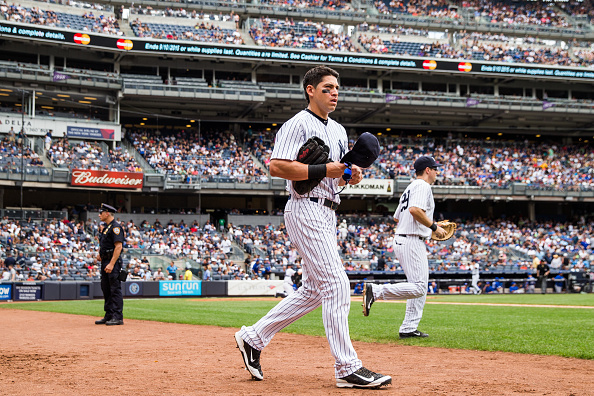
 The biggest mistake that fantasy baseball owners make each season is relying upon guys like Troy Tulowitzki or Jacoby Ellsbury with their early round draft choices. Sure, they may be incredibly talented players in their own right, but the most valuable attribute that any player can offer a fantasy owner is availability. Take Robinson Cano for example. In his 11-year career, Cano has averaged 153 games played per season, and if you take out his first two seasons and keep track since 2007, he’s played in an average of an astounding 160 games per season, making him one of the most consistent fantasy plays since Cal Ripken Jr.
In a season last year where many were pegging him as one of the biggest fantasy busts of the year, Cano – through his consistent availability of 156 games played – ended up evening out his stat line that otherwise labored throughout most of the first half of the season as his final numbers of .287, 21 home runs and 79 RBI not only made him one of the most valuable fantasy second baseman, but also provided his owners with excellent production when they needed it the most.
Guys like Tulowitzki tend to rack up tremendous numbers during the time that they are healthy, which for him is around only 100 games per season – a number that equates to about a little under 2/3 of the campaign. A perfect example for Tulo is 2014. In what was on pace to be a surefire MVP campaign he hit .340 with 21 home runs and 52 RBI in only 91 games played, but surprise, surprise, he suffered another debilitating injury. Headed into the following season, fantasy owners made the same mistake they have been making with him for his entire career, as they spent an average of an early second-round pick on Tulowitzki, anticipating him to take that historic condensed production from the season prior and to apply it across a 162-game span. At this point in his career, and after countless injury plagued seasons, anyone who spends that highly on the 31-year-old shortstop is managing his or her team with reckless abandon.
Taken only an average of one spot after Tulowitzki last season was Cano who, based off season averages across his career, consistently out-produces Tulowitzki. His career average is higher, he records more hits, home runs, RBI, runs scored, triples, almost two times the amount of doubles and, most importantly, he appears in an average of nearly 50 more games per season. Considering the substantial sample size from the two middle infielders, some stock has to be put into these surprising numbers right?
To put into other terms, let’s use fantasy football as an example. Essentially drafting an injury-prone player in fantasy baseball is equivalent to, in football terms, is like drafting a goal-line touchdown vulture. It may appear more transparent for football because they only play once a week, but in baseball the similarities hold true.
Matt Forte and Matt Asiata are players who no fantasy owner would ever consider on the same level. However, for about four weeks of the season in 2014, Asiata was better than Forte because of his touchdown vulturing skills. In two of the matchups he ran for three scores each time, making him a fantasy hero. In the other 12 games he was virtually invisible. On the season he ended up with nine touchdowns to Forte’s six, however, Forte was a consistent presence all season long, starting all 16 games for the Bears and providing a versatile skill set along the way. No one would ever argue for Asiata over Forte even though he was a better fantasy option for a quarter of the season right? Then why do people still insist on doing it in baseball for players who are only healthy and productive for a small portion of the season like Tulowitzki and Ellsbury often are? Ever since employing this strategy into all of my fantasy leagues, I began to rack up the titles including the 2015 Fantasy Alarm: Staff League championship.
It may sound stupid to have to say, but having an All-Star level player actually play in games is what will win you titles. Having them explode for portions of the season and on the DL for the rest will not. Even if we take what Yoenis Cespedes did for the Mets for a two-month stretch as a reference point in opposition of my argument, people should still realize that one of the main contributing factors to the Mets’ ultimate demise in the World Series is because of the injury that Cespedes suffered during the playoffs.
Ironic I know, but if you get anything out of this, hopefully it is that injuries are the ultimate equalizer in sports. All pro athletes are talented, but the great ones are the ones who are always available. There is no use in wasting a high draft pick on players who throughout their careers have never proven to be healthy. Instead use your higher picks on consistent, reliable, and available stars, and save the “high-risk/high-reward” selections for the middle rounds.
Player News
{{item.text}}
{{analysis.analysis}}