
José Soriano Fantasy Baseball: Buy or Sell the Angels Ace in 2026?

- Understanding What Makes Soriano's 2026 Profile So Exceptional
- Jose Soriano's Pitch Arsenal Is Built for Swing-and-Miss
- Jose Soriano's Fastball Is a Legitimate Weapon
- What the xStats Say About Jose Soriano
- Jose Soriano's 2026 Game Log Is Historically Good
- The One Risk: Walk Rate and Strand Rate Regression
- Fantasy Baseball Verdict: Buy Jose Soriano
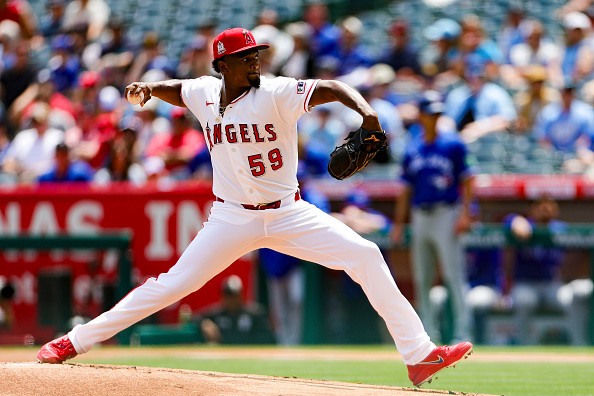
Jose Soriano is not a polarizing fantasy baseball target in 2026. He is a problem. Specifically, he is the problem that every fantasy manager who did not draft him or pick him up early is now losing sleep over. The Los Angeles Angels right-hander has been the best pitcher in baseball through the first five starts of the season, posting a 0.24 ERA across 32.2 innings with a 5-0 record, 39 strikeouts, and a WHIP of 0.82. For a player who entered the year with legitimate SP2 upside in most rankings, the 2026 version of Soriano is performing like a clear SP1 and showing no signs of slowing down. At 27 years old with four seasons of major league experience and a career 3.51 ERA already in the books, this is not a prospect breakout built on a handful of lucky starts. This is a seasoned pitcher operating at an entirely new level, backed by Baseball Savant data that is as impressive as any starting pitcher in the game right now. If you have Soriano, you hold him without a second thought. If you do not, the question of what it will cost you to acquire him is the most important transaction conversation you can have in your league this week.
Understanding What Makes Soriano's 2026 Profile So Exceptional
Before getting into individual categories, it is worth stepping back and looking at the full Savant picture, because the breadth of what Soriano is doing in 2026 is genuinely rare. He ranks in the 100th percentile in both Pitching Run Value and Fastball Run Value. His Breaking Ball Run Value sits at the 97th percentile, and his Offspeed Run Value at the 92nd. That means every single pitch category he throws is grading out as elite or near-elite by run value standards. Most pitchers have one or two above-average offerings. Soriano is getting positive run value contribution from his entire arsenal simultaneously, which is the kind of across-the-board dominance that sustains itself over a full season rather than regressing to the mean after a hot start.
Jose Soriano's Pitch Arsenal Is Built for Swing-and-Miss
The movement profile reveals exactly why Soriano is so difficult to hit, and it starts with the pitch mix itself. He operates with five distinct offerings thrown at above-average velocities across the board, each with its own movement signature that creates genuine tunneling and deception. His sinker is his primary weapon at 31% usage, sitting 96.8 mph against a right-handed pitcher average of 94.3. He pairs that with a four-seam fastball at 24% usage that actually sits harder at 98.0 mph, giving him two fastball shapes thrown at similar arm slots that move in completely different directions. That alone is a problem for hitters trying to pick up spin out of the hand.
The breaking ball is where the arsenal becomes truly elite. His curveball at 27% usage sits 85.9 mph against an 80.8 RHP average, throwing it five mph harder than a typical right-hander. With a 33-degree arm angle, the curveball generates a sharp downward break that plots well away from the four-seam cluster on the movement profile, creating a significant visual separation that plays up the fastball velocity even further. His splitter at 12% usage sits 92.7 mph against an 86.6 average, a full six mph harder than a typical split, which extends his fastball deception deep into counts where hitters are gearing up for a chase offering. The slider at 6% usage is more of a weapon against righties than a primary pitch, but at 90.5 mph, it gives him yet another look. The separation between all five pitch clusters on the movement chart is as clean as you will find on any pitching profile in the league right now, which is the visual confirmation of what his whiff and chase numbers are already telling you.

Jose Soriano's Fastball Is a Legitimate Weapon
The foundation of Soriano's success is a fastball pairing that is unlike most starters in baseball. The four-seamer at 98.0 mph sits three miles per hour above the RHP average, while the sinker at 96.8 mph gives him a second fastball variation that generates ground balls rather than swing-and-miss. Together, they account for 55% of his pitch usage and create a baseline of velocity that makes his breaking ball and offspeed even more effective by comparison. His 100th percentile Fastball Run Value tells you that hitters are actively losing value on a per-pitch basis when they see either version, which is the difference between a pitcher who throws hard and a pitcher who dominates with his fastball. His Chase Rate sits at the 81st percentile and his Whiff Rate at the 87th, meaning hitters are both chasing pitches out of the zone and missing when they do swing. His strikeout rate of 32.5% ranks in the 91st percentile leaguewide, producing 10.74 strikeouts per nine innings on the season. For fantasy purposes, the strikeout upside here is as reliable as any starter currently rostered in your league, and it is paired with a ground ball rate in the 92nd percentile at 58.8%, giving him elite contact suppression across both strikeout and ground ball dimensions simultaneously.
What the xStats Say About Jose Soriano
The surface ERA of 0.24 is going to normalize. Nobody finishes a season with a sub-one ERA, and it would be irresponsible to project Soriano's fantasy value as if that number is sustainable. What matters is what the underlying metrics say about where his true talent level sits. His xERA of 2.73 ranks in the 82nd percentile, and his xBA of .191 ranks in the 86th, both of which confirm that the elite results are not purely a product of sequencing luck or an inflated strand rate. His average exit velocity allowed sits at the 77th percentile, his hard-hit rate at the 81st, and his barrel rate at just the 32nd percentile, meaning hitters are not squaring him up cleanly even on the occasions where they make contact. The LOB% of 100% across five starts will absolutely come down, and when it does, the ERA will climb. But an xERA in the 2.73 range for a pitcher with this strikeout profile and ground ball rate projects to legitimate SP1 production for the remainder of the season.

Jose Soriano's 2026 Game Log Is Historically Good
Five starts into the season, and Soriano has not allowed more than one earned run in any single outing. His March 26 debut at Houston set the tone immediately with six shutout innings and seven strikeouts. He followed that with another six-inning shutout at Chicago, then went out and threw eight innings of one-run ball against Atlanta in what might have been the best individual start by any pitcher in baseball this season. The April 12 home start against Cincinnati added seven more shutout innings and ten strikeouts. Even his least dominant outing, a 5.2-inning, two-earned-run performance against San Diego on April 17 with four walks, still produced eight strikeouts and a quality start. The walk total that day is the one area worth monitoring. His seasonal BB/9 of 3.58 and his 36th percentile BB% represent the only real crack in an otherwise airtight profile, and if the command wavers further, it will create some volatility in his ratios. For now, however, his FIP of 2.35 and xFIP of 2.83 suggest the walks are not yet materially hurting his underlying quality.

The One Risk: Walk Rate and Strand Rate Regression
Every buy recommendation deserves an honest look at the downside, and for Soriano, there are two legitimate concerns. The first is the walk rate. A BB% sitting in the 36th percentile is not disqualifying for a strikeout pitcher, but it is something to track closely. If his command slips and the walks pile up, it can snowball quickly, particularly against lineups capable of stringing together hard contact. The split-heavy offspeed approach and the curveball usage both carry some inherent ball-in-dirt risk that can inflate walk totals in his worst outings. The second concern is the 100% strand rate, which is a mathematical impossibility to sustain over a full season. As runners begin scoring that were previously stranded, the ERA will climb toward his xERA and beyond. Fantasy managers expecting a sub-one ERA through October will be disappointed. Fantasy managers expecting a top-five starter the rest of the way, with ace-level strikeout production and elite contact suppression, are calibrated correctly. The risk here is modest relative to the upside.
Fantasy Baseball Verdict: Buy Jose Soriano
Jose Soriano is pitching like the best starter in baseball right now, and the underlying metrics say the performance is real. He has a 100th percentile fastball, a 91st percentile strikeout rate, a 92nd percentile ground ball rate, and an xERA and xFIP both sitting below 2.85. He is 27 years old, healthy, experienced, and operating with a five-pitch arsenal that is generating elite run value across every pitch type simultaneously, with movement profiles that show genuine separation and deception built into the design. If you own him, this is the player you build your staff around. If you do not, expect to pay an uncomfortable price to acquire him, because the fantasy managers who have him are not selling. Pay it anyway.
- Verdict: BUY / HOLD
Player News
{{item.text}}
{{analysis.analysis}}