

 As Chief Justice of Fantasy Judgment, I am frequently asked to review the legitimacy of trades. When doing so, I must evaluate each trade on a case-by-case basis taking into account a myriad of factors to determine whether a trade should be approved or rejected. Some of these factors include the format of the league, the needs of both teams, determining whether any collusion exists and the overall fairness and equity of the deal.
But what goes into making a trade in your fantasy football league? It is not as easy as it sounds because there are opposing valuations of players by both parties of the deal. There is also a lot of trepidation, as GM’s do not want to end up on the short side of the deal after it is made. That is why making trades in fantasy football leagues is an art, not a science. Here are some helpful hints to guide you during the journey of negotiating trades.
1. Do not trade for the sake of trading.
Do not underestimate the simplicity of that statement. Many GM’s feel compelled to make trades for a variety of reasons, but trading does not necessarily guarantee improvement to your team. If you are happy with the roster you drafted and somehow manage to evade the injury bug, then there is no reason to break it up simply for the sake of making a deal. Just because someone makes an offer to you does not mean you are compelled to negotiate a trade. Do not fall victim to over-managing. Only consider making a trade if you believe it will improve your team.
2. Do not be afraid to trade a superstar.
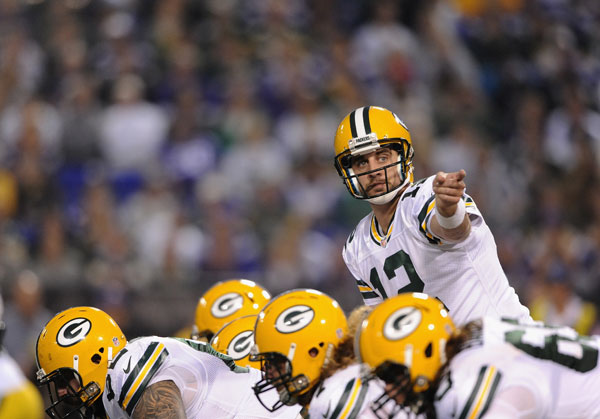
Hold your horses before concluding that I think you should trade players like Aaron Rodgers or Adrian Peterson. The team with the first overall draft pick typically gets the best player on the board (at least the projected best player). But then that team does not draft again until the next 24 players are off the board (or more depending on how many teams are in your league). By that point, the best wide receivers and running backs are typically gone leaving that team with the bare bones to pick from who is left. Having the first overall pick does not guarantee success by any means. It is more important to have a well-balanced roster up and down, so do not rule out the possibility of trading one star player in exchange for two very good players. You stand a better chance of success having a deeper roster rather than one that is top heavy.
 3. Accumulate depth and trade from a position of strength.
This is not always easy since fantasy football rosters generally do not have a lot of extra roster spots. But if you draft correctly, you can build a solid core of running backs or wide receivers, which could allow you the flexibility of using some of that depth as trade bait. You don’t want to cut your nose to spite your face, so dealing your only productive running back for a second or third wide receiver may not be the wisest thing to do.
4. Assess other teams’ weaknesses and pounce on them.
If you are looking to make a deal, the best trading partner you can have is another team that is desperate. Look at everyone else’s roster and see who has suffered a catastrophic injury. That team is more inclined to make a move out of desperation, which can only increase your leverage for a better return in a trade.
5. Be honest with yourself.
We all are guilty of over-valuing our own roster. It is human nature to have the need to validate our own decisions, especially ones we make during the draft. But the truth is that not all of our own decisions pay off. Just like we expect our trading partner to be realistic about his/her players, we must be realistic about our own players as well. It is perfectly fine to begin negotiations with a proposal that heavily favors you, but you must have the expectation that the other team does not see things the same way. In order to make a trade, you have to accept that not everyone else values your players the way you do.
6. Understand your league’s rules and roster requirements.
It happens more frequently than you would think that a fantasy football owner either ignores or forgets the rules of his own league. All leagues are constructed differently in terms of roster and lineup requirements. You must be keenly aware of what is required for a valid lineup and roster and act accordingly. If your league only permits a maximum of five wide receivers on your roster, do not then pursue a trade where you would be acquiring a sixth. This also applies to the scoring system your league employs. If you are not in a PPR league, then certain wide receivers do not have the same value as they would in leagues that do award a point per reception.
 7. Be respectful and courteous to your fellow league members.
This may seem superfluous, but it matters. Fantasy football leagues are comprised of friends, family, colleagues, acquaintances and perfect strangers. But we all share the common interest in having fun playing fantasy football. If someone makes an overture to you about a possible trade, have the common courtesy to respond in some capacity. It doesn’t mean you have to make a deal or even go through with negotiations. But if someone takes the time to reach out to you, at least provide a response of some sort. There are few things more frustrating that reaching out to league members who ignore your correspondence. Even if you aren’t interested in making a trade now, you will at least have a dialogue from which to build on down the road when you are ready to make a deal. Otherwise, you could develop a reputation where fellow league members will not want to negotiate with you.
8. Do not collude with your fellow league members.
This is another obvious bit of advice, but it is worth mentioning. Next to non-payment of league fees or a commissioner’s commissioner’s abuse of power, there is nothing more that will undermine the integrity of a fantasy football league than two teams colluding. Collusion is defined as two or more parties entering into a mutually beneficial agreement with a fraudulent purpose. Whether it is orchestrating a one-sided trade, sharing prize money, manipulating the waiver wire or intentionally putting out a sub-standard lineup, collusion can manifest itself in many ways. Everyone wants to win their league, but you need to do it the right way.
9. Pay attention to the NFL schedule.
Everyone has instant access to the NFL schedule, which tells you what the matchups are and which teams are on bye weeks. You need to take that into consideration when drafting, but you also should pay attention to it when negotiating a trade. If you acquire a player who shares the same bye week as your other starters, then you could be in trouble that particular week. You should also target players that are on teams with either weak schedules or in divisions with favorable opponents who will play lesser teams twice in the season. Plus, not to get ahead of ourselves, but it cannot hurt to look ahead to Weeks 13-16 when the fantasy playoffs typically take place. It may be presumptuous to assume you will make the playoffs, but you should at least consider teams’ schedules during those weeks for players who you may be targeting in a trade.
10. Do not let your league vote on the approval of trades.
This is one of my biggest pet peeves in all of fantasy sports. Leagues that allow or require a vote by its members to approve or reject a trade are set up for disaster. That is not to say there aren’t leagues out there comprised entirely of honest, diligent and objective GM’s who will do the right thing. But let’s be honest, everyone has their own agenda in mind. If you have the opportunity to block someone else’s trade that could have a detrimental effect on your team, you can or might take advantage of that. Plus, there is no guarantee that all league members will do their civic duty and actually vote on the matter. While it is not foolproof, the best option for trade approval still rests with the commissioner’s autonomous decision-making ability (except for trades that the commissioner himself is involved in). I would be remiss if I also didn’t throw out there the option to have all of your league’s trades submitted to Fantasy Judgment for independent and objective review (shameless plug). But either way, league votes are not the way to go.
Player News
{{item.text}}
{{analysis.analysis}}