
Exposing the Components of S.O.S. (Strength of Schedule)

Published: Jul 20, 2014

There are a lot of different factors that come into play when picking a defense/special teams (D/ST) in fantasy as well as trying to expose weak rushing and passing defenses to optimize fantasy points for offensive players. Below, you will find keys to drafting a D/ST, some strategies to use each week regarding strength of schedule and whether top tier defenses translate year-to-year. Before we get into the juicy stuff, here are some draft strategies to use regarding strength of schedule.
Don’t worry about the yearlong schedule when drafting players
Sounds simple I know, but this is mistake a lot of fantasy owners make. Never avoid drafting a player because he plays a “rough” team during week 14 or 15. First off, fantasy football is a week-to-week sport as players get injured constantly. Don’t get me wrong, you want to assemble the best players at the draft that will hopefully stay healthy, but nothing is a given in this sport so don’t worry about what is going to happen in 3 months. Second, the team you fear that was a great defensive last season, could be average or not that good (more on this issue later in the article). Third, the stud player that was drafted in the first four to five rounds should be your starter no matter what the matchup is. That is why you spend a high draft pick on those players.
Bye weeks are bye weeks, don’t think too much into it
Another common mistake that is often made by fantasy owners in a draft is worrying about a player’s bye week. For example, they won’t draft a specific player they like because he has the same bye week as some players they already drafted. That is nonsense and a losing strategy. So half your starters have the same bye week, big whoop! Yes, you could lose that week, but there are also going to be weeks where your team puts up massive points and the result is still a loss. Also, it means your team will be at full strength tDrafting a defense should be purely about week 1, maybe week 2, because there are always matchups that can be exposed: Here are the four key rules to picking a defense each week
 Rule 1: Don’t invest more than one of your last two picks or $1 to $2 dollars on a defense. Spending more than that on defense is ludicrous and is not a smart strategy. While a defense like Seattle does produce a lot of points over the course of a full season, there are different defenses that can be used to match their production each week. It is all about matchups when choosing a defense. The Bears were the #1 overall defense in 2012, but they were one of the worst defenses last season and gave up an astronomical amount of rushing yards per game (161 per game, that is not a typo). By the way, that dreaded Seattle defense faces the Green Bay Packers in week one, which is a matchup I want nothing to do with.
Rule 2: Go after the team that is facing a bad QB that is turnover prone and has a bad offensive line. Defenses scoring touchdowns is hard to predict, but finding turnover prone QBs is not. Here are some underrated defenses to target for week one that are facing a bad QB:
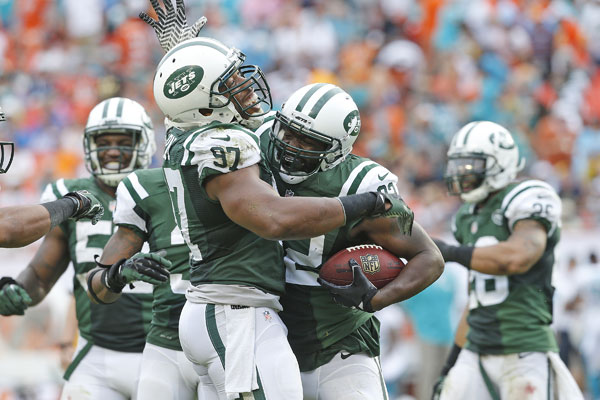
New York Jets vs the Oakland Raiders: If the Raiders were smart, they would run the ball 40 times between Darren McFadden and Maurice Jones-Drew, but the Raiders aren’t smart as they signed Matt Schaub to be their starting QB. Schaub threw more interceptions last season (14) than he did touchdowns (10).
Baltimore Ravens vs Cincinnati Bengals: The Ginger Ninja (Andy Dalton) threw 20 interceptions last season, seven of those came in two games vs the Ravens. In six career games vs Baltimore, Dalton has managed only six touchdowns while throwing 11 interceptions.
Some other defenses to target week 1: St. Louis Rams vs Minnesota Vikings and Matt Cassell.
Rule 3: Sacks add up: Targeting teams with players that produce big sack numbers is a good strategy. While sacks are only one point, if a defense can produce a handful of sacks each game, then those points add up. Also, sacks lead to fumbles, which leads to more points and possible return touchdowns.he rest of the season if they all had the same bye weeks. Plain and simple, do not factor in bye weeks during your draft.
Here are the top 10 teams in sacks from 2013:
1. Carolina Panthers- 60
2. Buffalo Bills- 57
3. St. Louis Rams- 53
4. New Orleans Saints- 49
5. New England Patriots- 48
6. Kansas City Chiefs- 47
7. Arizona Cardinals- 47
8. Seattle Seahawks- 44
9. Green Bay Packers- 44
10. Cincinnati Bengals- 43
Half of these teams were also top 10 in passing yards allowed per game. Passing defense starts with the defensive line, not the CBs or safeties. Targeting the teams with a strong defensive line that causes havoc to QBs is a good way to stream defenses each week.
Rule 4: Having a good kick returner is a bonus:
The Kansas City Chiefs actually finished as the #1 overall defense in fantasy points scored in some formats and a big reason for that is the fact they had four kick returns for a touchdown. One team had three kick returns for a touchdown (Vikings), while only three teams managed two kick return touchdowns. In fact, 20 teams didn’t even produce a kickoff return for a touchdown. So while it is something to consider, it shouldn’t be the main reason to choose a D/ST each week. If you do get lucky enough to have a player return a kick for touchdown, feel great about it, because it is unlikely to happen again.
Do good defenses translate year-to-year?
 This is a big question as fantasy owners try to gauge what defense to target based on last year’s stats and whether they should target certain players based on strength of schedule off of last year’s stats. To get the answer, I looked at last year’s defensive stats, one is based on rushing yards allowed and the other is based passing yards allowed, to see how they compared with their stats from 2012. Here are the results.
Top rushing defenses in 2013 (rushing yards allowed per game) (here is where I got my stats from: Bookmark it. http://www.teamrankings.com/nfl/stat/opponent-rushing-yards-per-game)
Numbers in parenthesis are their 2012 rushing yards allowed per game average.
1. Arizona- 84.4 (137 RYA in 2012)
2. NY Jets- 88.2 (133.6)
3. Carolina 89.2 (110.1)
4. Denver 97.5 (94.9)
5. San Francisco 98.3 (93.9)
6. Detroit 99.8, they allowed only 66.5 RYDS per game at home, but allowed 133 RYDS per game on the road. More on splits in a bit. (118.1)
7. Cincinnati- 102.4 (110.2)
8. St. Louis- 102.9 (117.5)
9. Seattle- 105 (106.7)
10. Baltimore- 105.4 (126.6)
Denver and The 49ers were the only teams to finish in the top 5 rushing defenses (yards allowed per game) in back to back seasons (2012 & 2013). In fact, no other team finished in the top 10 of rushing defense in back to back seasons. Not only that, but that “dreaded” Seattle defense allowed over 100 rushing yards per game. That means that stud running backs would still produce solid fantasy numbers vs them. Also, every team in the top 10 (excluding Seattle, San Francisco and Denver) made drastic improvements in their run defense compared to the year before.
Bottom 5 of rushing yards allowed per game.
New England- 128.9 (102.3)
Jacksonville- 131.8 (141)
Indianapolis- 132.6 (139.4)
Atlanta- 135.8 ( 124.6)
Chicago -161, allowed 131 rushing yards at home and an unbelievable 191 rushing yards on the road. (101.7)
The Bears gave up an astronomical amount of rushing yards on the road and went from the 7th best rushing defense in 2012bto the worst rushing defense in 2013. The Patriots also had a huge down year in rushing yards allowed per game. Very few defenses are the same each year, so it is hard to predict which defense will be strong in 2014 based off of their 2013 stats. In other words, you draft stud players for a reason so never bench your stud running backs no matter what defense they face. Especially if you are basing your decision based on last year’s numbers.
Top 10 passing defense based on passing yards allowed per game.
1. Seattle- 177.5 (199.9)
2. New Orleans- 188 (292.6)
3. Houston- 195.2 (225.7)
4. Cincinnati- 203.9 (215.4)
5. Buffalo- 204.4 (217)
6. Carolina- 212.8 (223)
7. San Francisco- 218.2 (216.9)
8. Cleveland- 221.1 (245.2)
9. Pittsburgh- 221.6 (185.2)
10. NY Giants- 223.3 (254.2)
Passing yards allowed by defenses translates better year-to-year than rushing yards allowed. Most of these teams were pretty good passing defenses in 2012 and got better in 2013. New Orleans made a drastic improvement by allowing over 100 less yards per game through the air. However, that has a lot to do with Sean Payton not being there in 2012. Another thing to take into account is that five teams that finished in the top 10 in sacks also finished in the top 10 in passing yards allowed (Seattle, New Orleans, Cincinnati, Buffalo and Carolina). That means teams that were able to put pressure on the QB and produce sacks were also able to limit how effective the QB was.
Bottom 5 teams
Kansas City- 258.7 (220.8)
San Diego- 260.8 (230.1)
Dallas- 286.8 (230)
Philadelphia- 287.4 (216)
Minnesota- 287.9 (245)
 These teams had major drop-offs in 2013 compared to their 2012 passing yards allowed per game. The Vikings were the only team in the bottom five that had a losing record. That is mind boggling, but this says more about who they face, then how bad the team is. The Chiefs and Chargers have to play Peyton Manning twice a year, while Dallas and Philadelphia are in a division that boasts four QBs that throw the ball a lot in RG3, Tony Romo, Nick Foles and Eli Manning.
There were four teams that placed top 10 in both categories (Seattle, Cincinnati, Carolina, San Francisco). Three of those teams, excluding San Francisco, finished in the top 10 in sacks as well. Carolina and Cincinnati will be great teams to target in drafts and streaming each week, as a majority of fantasy owners will overlook those two squads.
Another thing I came across in doing research was that home and road splits differ with each team. Some teams allow more yards at home then on the road and vice versa. Over 60% of the teams gave up more than 10 extra rushing yards at home or away, but the splits varied with each team. So to think a team gives up fewer yards at home than on the road is not necessarily true. However, a pattern does emerge with each team’s splits, but that is something that takes time to develop and needs at least four to six games played before fantasy players can take splits into account.
What does all of this mean and how to apply it to take advantage of SOS (Strength of Schedule)?
It means you want to target a D/ST each week that can rush the QB and produce sacks. This is crucial for DFS players who want to maximize value on the D/ST they pick each week. On the flip side, target QBs and WRs that face teams that do not put pressure on the QB and give up a lot of passing yards per game. At the same time, don’t just sit a stud running back because he faces a tough rushing defense. However, that also means to stay away from certain RB in DFS lineups when they face those tough rushing defenses. While it does take a little extra time researching defensive stats each week, you don’t win fantasy championships by sitting on your hands all day hoping to get lucky. Remember, this is football: players get hurt, schemes change and every week is different from the week before, but fantasy players that make the right plays and pickups each week are usually the ones that win most weeks and in the long term. Take every advantage possible by exposing the right D/ST to play each week and target offensive players that play weak passing or rushing defenses.
Player News
{{item.text}}
{{analysis.analysis}}