
2018 MLB Draft Guide Player Profile: Roberto Osuna

Published: Jan 27, 2018
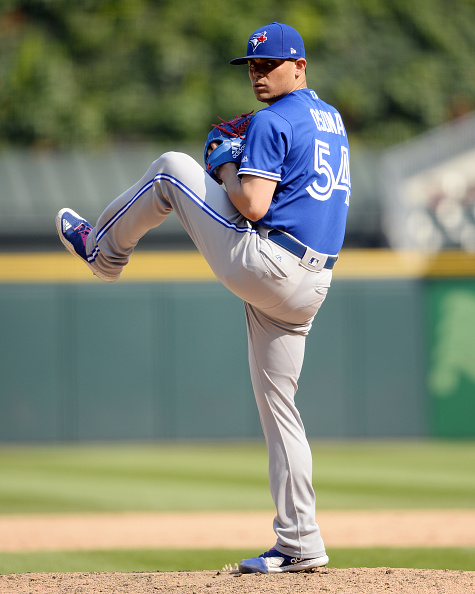 Roberto Osuna
| Age: | 22 |
| Bats/Throws: | R/R |
| Height/Weight: | 6'2". 230 lbs |
| Position: | Relief Pitcher |
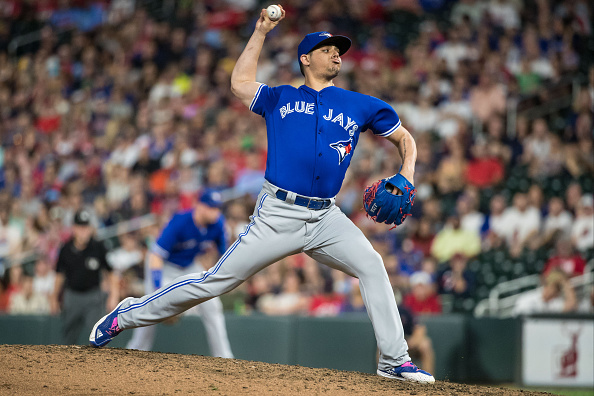
Unfortunately, playing fantasy sports sometimes dehumanizes players. Whether it’s viewing them as commodities, being disappointed by performance or taking these examples personally, most can relate. Toronto’s talented closer Roberto Osuna took pause from this and provided a glimpse to the human side of sports.
In August of last year, Osuna did not take over in the ninth for the Blue Jays with a lead on the road. While many speculated on what could be wrong, his manager, John Gibbons told reporters Osuna did not feel well. Although the story could end with this statement, Osuna opened up, admitting he did not feel right. Nothing mechanical, Osuna felt lost, dizzy and alone. Osuna hails from Mexico. Anyone with a family can understand missing their family while away and the frustration of trying to face it.
Labels do not give credence to the feelings related with anxiety issues. People deal with it in various forms, but 2017 marked a rough year for Osuna. He blew a lead in the World Baseball Classic while representing his country. After making closing look relatively easy, he endured a career-worst 10 blown saves last year, one more than the two previous seasons combined. Osuna not only seemed more human dealing with his personal issues (and admitting them), but on the mound as well.
Hiding beneath the rubble of the blown saves which seemed to punctuate his season were some terrific metrics along with the notoriety of being the all-time saves leader for players age-21 or younger. In 2017, Osuna’s BABIP (batting average of batted balls in play) rose from .256 the previous season to .285, his career worst. His strand percentage cratered to 59.5 percent compared to a career mark of 74.2 in spite of his tough luck last year.
Osuna is also the first Blue Jays reliever to finish back-to-back seasons with 35 or more saves. Of his 39 saves in 2017, Osuna recorded 26 clean appearances, including eight in which he struck out the side. After admitting his struggles, Osuna finished the season retiring the last 16 hitters he faced, eight via strikeout. He also finished with 49 save opportunities on a Blue Jays team which finished 17 games behind Boston in the American League East. Suffice it to say, closers do not need to be on a contender to be elite.
So why focus a profile on a closer people know about? First, being a closer has not proven to be easy considering the high turnover of pitchers in the role each season. Second, Craig Kimbrel completed a tremendous season last year after going through some of the same statistical struggles just one year prior. Many took a chance on Kimbrel when his average draft position fell to 80th using NFBC draft data and were rewarded in due turn.
Starting pitching features a “big four” so far in drafts and auctions. The same can be said for closers with both Kenley Jansen and Craig Kimbrel being taken on average before the end of the third round. Just below them, Corey Knebel and Aroldis Chapman will be drafted prior to pick number 65 which leads us to the next tier. Roberto Osuna’s early ADP places him as the fifth closer in the fifth round. Due to a lack of teams with an established closer, and a focus on starting pitcher in the early rounds, passing on the top four closers and targeting Osuna could make sense. Here’s why.
It starts by looking back at Kimbrel in 2016 compared to Osuna last year. In an effort to streamline this, here’s a look at their comparative statistics:

With the premise of each pitcher owning the same relative average draft positions in the following season, Osuna looks like a top-three reliever without the price. Especially relative to the cost of Kimbrel based on early drafts. Did you know Osuana’s never owned a WHIP above 1.00 since making his major league debut in 2015?
There’s some risk in Osuna’s dreadful home and road splits from last year, but some of this can be attributed to his issues dealing with anxiety. It could be that he struggles when away from home. Of more importance, Osuna added a new pitch to his arsenal. He did throw a cutter in 2016, but only 4.1 percent of the time. Left-handed hitters slashed .231/.287/.443 against Osuna in this season faring much better than righties.
However, Osuna unleashed the cutter 25.5 percent of the time last year cutting down left-handed hitters effectiveness, dropping his slash lines against to .200/.252/.252. Focus on the over 200 percentage drop in slugging percentage against. This will be a key to his furthered success in 2018.
At a time when Hall-of-Fame bantering will center on Mariano Rivero entering the vote next year, he will ride his cutter effectiveness to Cooperstown. Why not Osuna taking a step forward if his BABIP and strand rates return to his career levels to merge his 2017 ERA toward his FIP? Osuna then enters the conversation as a top-3 closer.
Delving a bit deeper using the data on BrooksBaseball.net, Osuna’s change generated a whiff-per-swing rate of 43.75 with a .083 batting average against and zero isolated power. His cutter produced a 37.21 whiff per swing, .222 average against and .111 isolated power while his slider topped the list with a 53.91 whiff per swing, .127 batting average against and .028 isolated power. These prove to be elite numbers.
In spite of Osuna’s dreadful 5.10 ERA away from Rogers Centre, his FIP of 2.16 over the 30 innings provides hope. A career year could be in store for Osuna at a depressed investment number. Closers rarely provide profit, but Osuna could be a unicorn in 2018. And on a personal note, his ability to face his struggles head on without hiding from them makes me pull for him to do it.
Player News
{{item.text}}
{{analysis.analysis}}