
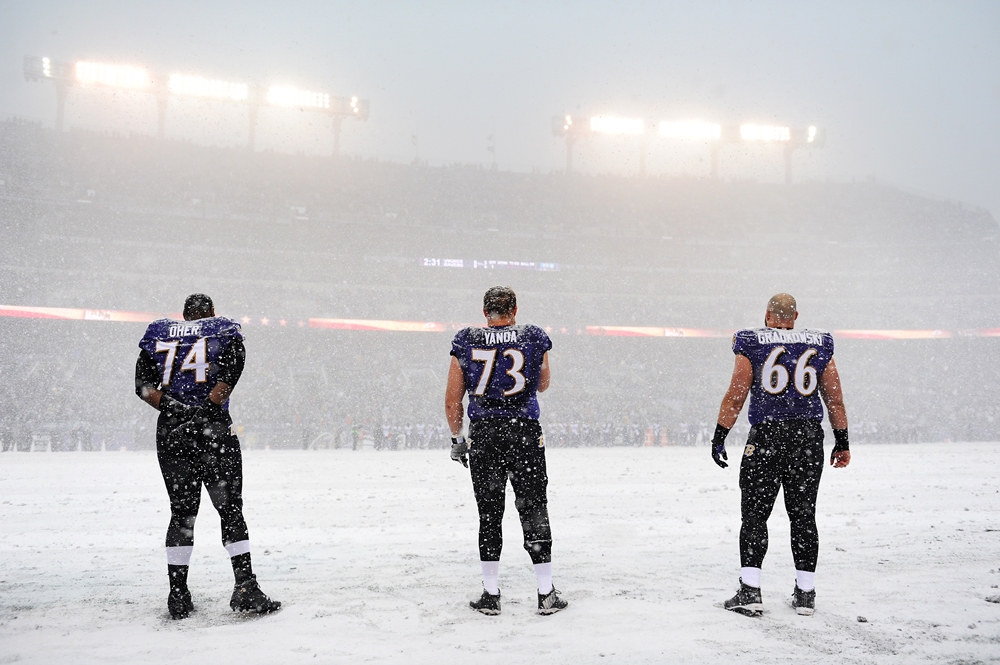

 This is a situation that always ends up getting confused, so I will do like Walter White and tread lightly. We all know that weather impacts football unlike any other major sport. It may even be more impactful than the air pressure in footballs.
There are very few weather delays in football and once in a decade does a game ever get postponed due to weather. So the teams, players, coaches and most importantly fantasy football players are at the mercy of whatever Mother Nature decides to throw at us on Sunday.
Believe it or not, weather is a factor in every single draft pick I make. When I say “a factor” I do NOT mean that I only select players that play in a dome. If I had to attach a number to it, I would say that 5-10 percent of my selection process involves weather considerations. I do not play in many leagues that permit trades, so take note if you draft whomever and then trade them to some dumb sap in your league right before the bad weather hits.
My general idea for a perfect draft is taking warm weather quarterbacks and kickers, cold weather running backs and defense/special teams and domed wide receivers. Of course it doesn’t work out that way very often but that is usually my general plan heading into a draft. Thus, a team consisting of Tony Romo, Matt Forte, C.J. Anderson, Julio Jones, Keenan Allen, Brandin Cooks, Matt Prater and the Jets defense/special teams would be a very solid team for me to build.
The goal here is to limit the exposure your team has to cold and potentially inclement weather late in the season. Early on, weather isn’t a big factor in fantasy football but as the seasons change and winter arrives, it becomes paramount. The structure of fantasy football also puts an emphasis on weather. Think about how many great fantasy teams you’ve drafted and seen drafted that have not won a championship. As we all know, all it takes is one bad week during the playoffs and even a stacked team will fall.
It’s not just rain or snow that impacts fantasy numbers either. Wind is quite possibly the biggest weather factor in fantasy football. Wind affects the passing game and kicking quite dramatically. Cities like Chicago where the average wind speed at Soldier Field in December is 14 MPH can destroy your title dreams with just one bad storm. Weather has become much more important in recent years with so many fantasy teams relying on huge performances and numbers from their quarterbacks and wide receivers.
I’m not telling you to stay away from all Packers, Bears, Bills, Patriots or any other cold weather teams. What I am saying is that when you are torn between two players and trying to decide which is the right way to go, you have to consider how effective each will be in bad weather late in the season. Knowing what kind of conditions your players will be playing in gives you a big advantage over your opponents. There are few fantasy football players that think this far ahead or plan for such occurrences. You can’t set your team up in a way that one bad storm on a Sunday afternoon will ruin your chance at a title. This is why these kind of strategies are the difference between those that win their league once in a decade and those that compete for the title each and every season.
Player News
{{item.text}}
{{analysis.analysis}}